Gandhinagar

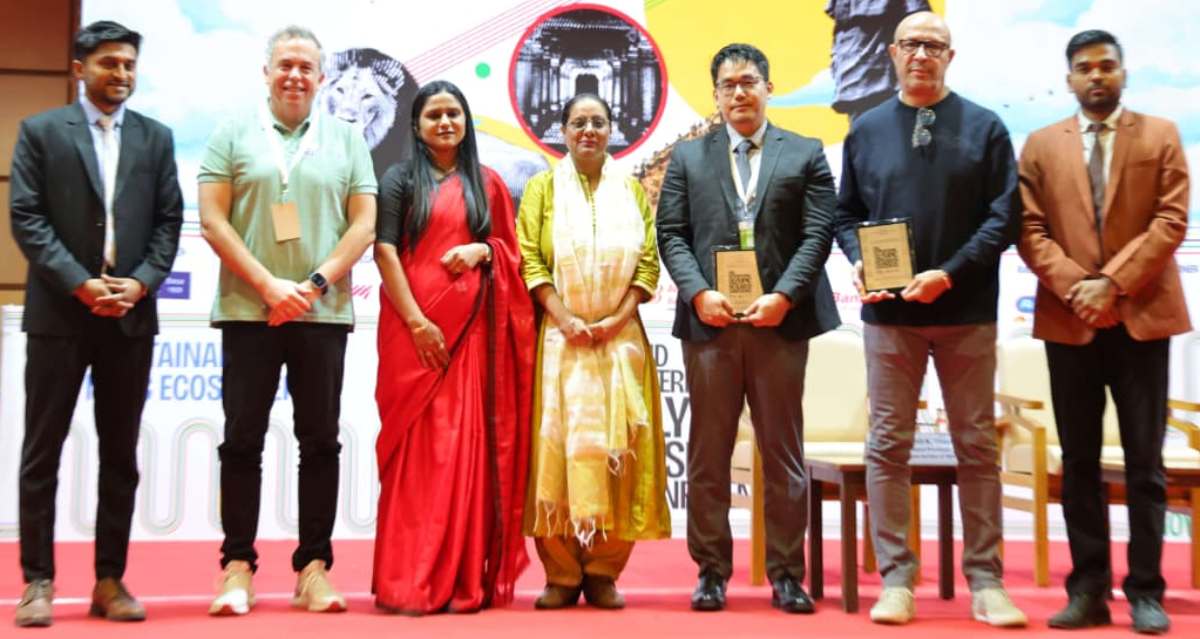
The Bharat Centre of Olympic Research & Education (BCORE) at Rashtriya Raksha University, which is recognized by the International Olympic Committee (IOC), conducted Day 3 of the 2nd Edition of the International Olympic Research Conference on January 29th, 2026. The day brought compelling sessions on themes such as Research- coach divide, sports science, high performance training and empirical coaching, implementation of anti-doping strategies in Asia as well as prevention and detection of antidoping.
The first session, addressed by Dr. Rohit K. Thapa, Assistant Professor at Symbiosis School of Sports, discussed the gripping topic of “Bridging the Research-Coach Divide: Translating Research into Practice”. Viewing sports through a scientific lens, he shared his enthusiastic work which focuses on providing evidence-based strategies to coaches leading to a considerable improvement in fitness and athletic performance. He compared the top 15 countries in sports research output across 2016, 2020, and 2024, and said that India ranked 8th globally in sports research publications between 2024 and 2026. However, he cautioned against equating research volume with real-world impact, stressing that “correlation is not causation.” Despite increased output, India’s translation of research into elite sporting performance remains limited. A central theme of the session was the persistent gap between academic research and coaching practice. He explained that while research is typically rigorous, hypothesis-driven, and slow to publish, often taking 18-24 months, coaches operate in fast-paced, adaptive, and performance-driven environments, requiring immediate, context-specific solutions.
Mr. Eric Hollingsworth, High Performance Director at Vijayi Bharat Sports Academy, contradicted with the idea of sports science. He opinionated that sports science is ultimately futile if the athletes are not efficient. Sports science, in a sense, is mainly beneficial for the elites. He underscored the need to create a body of coaches who are well-versed in elitism and professional coaching, which he pointed out as the reason for Australian success in sports. He underscored the significance of critical thinking and called for the full hearted commitment of the athletes and the coaches alike to increase the high performance in sports
Dr Mayumi Yamamoto Director of WADA Asia/Oceania talked about regional strategies and implementation of anti doping strategies in India.WADA was established in 1999 to lead a collaborative worldwide movement for doping-free sport A world where all athletes can participate in a doping free sporting environment. It is an international independent agency funded equally by the sport movement and governments of the world. It promotes, coordinates and monitors activities towards the prevention, deterrence and detection of doping.Its primary role is to develop, harmonise, and coordinate anti-doping rules and policies (the Code) across all sports and countries. She also talked about WADA’s mission, which is to lead a collaborative worldwide movement for a doping free world.
Prof. Dr. Alka Beotra, a member Board of trustees Anti Doping Lab Qatar (ADLQ), Doha and former scientific Director of India’s National Dope Testing Laboratory, delivered an authoritative session tracing the evolution of global anti-doping science, highlighting how the fight against doping has progressed from basic testing in the 1960s to today’s sophisticated, intelligence-led systems. Drawing on her leadership at WADA-accredited laboratories in India and Qatar, she explained the expanding scope of the Prohibited List from just 40-50 substances in 1967 to over 500 today and unpacked the rigorous scientific and ethical criteria behind banning substances such as tramadol and THC. The session illuminated advances in sampling techniques, mass spectrometry, long-term storage, and emerging applications of artificial intelligence, underscoring how innovation continually reshapes detection capabilities. She also emphasized that anti-doping is a dynamic, evidence-driven ecosystem where science, policy, and athlete protection converge, reaffirming that safeguarding fair play demands constant adaptation, global coordination, and unwavering commitment to integrity in sport.